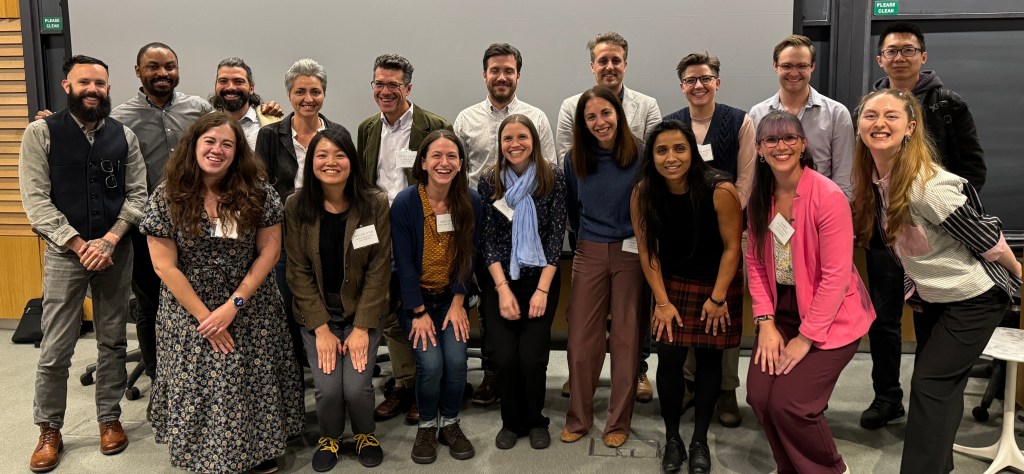
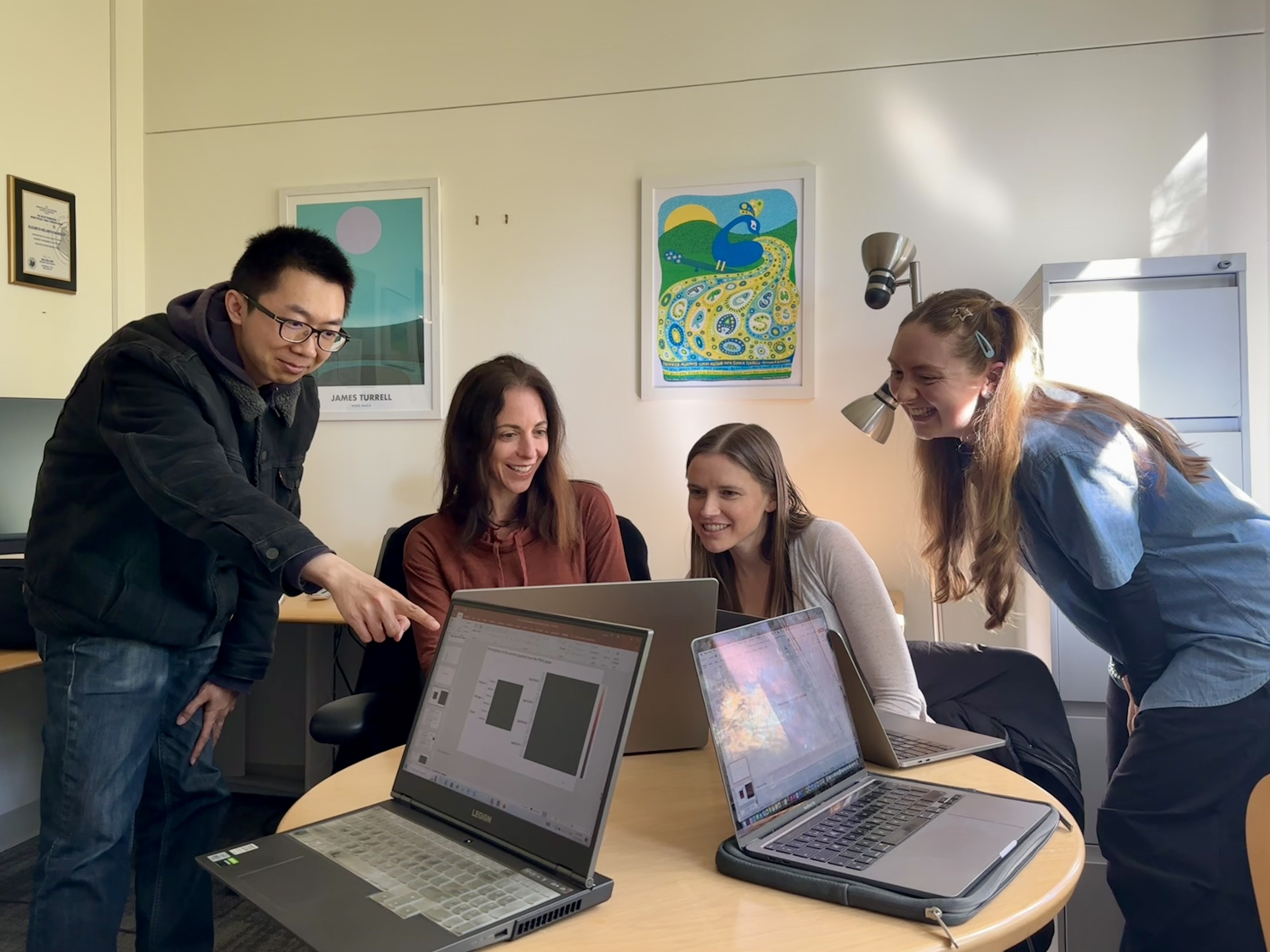
During 1st – 26th October 2024, I paid an academic research visit to our collaborator Professor Elizabeth Margulis’s Music Cognition Lab at the Music Department of Princeton University, along with my supervisor Kelly and co-worker Hazel. This trip was so fruitful and enjoyable, and in the middle of this period we also delivered an oral presentation at the music-evoked imaginings workshop. Here, I would like to share some of my experiences with you.
Located at the Woolworth Center for Musical Studies, Professor Elizabeth Margulis’s Music Cognition Lab at Princeton University is one of the most successful laboratories that study cognitive science of music. Since January/February of 2024, we have had the honor to remotely collaborate with Professor Elizabeth Margulis on our supervisor Dr Kelly Jakubowski’s Leverhulme Trust project “Using music to investigate perceptual and cognitive constraints on imagination”. This research trip brought all four of us in person for the first time and gave us a chance to meet many wonderful people in the Princeton lab and beyond.
During this trip, I had the opportunity to attend plenty of lab meetings, seminars and tutorials. These events cover a wide range of topics, from musicology to music psychology to natural language processing and data science, which deepened my understanding about music cognition as an interdisciplinary subject at the intersection of the humanities and the sciences. One of the highlights of this research trip was the music-evoked imaginings workshop, which was hold on 15th October at Princeton.
The music-evoked imaginings workshop brought researchers from different disciplinary backgrounds together and discussed the cognitive and neural mechanisms supporting music-evoked thoughts. During the workshop, Kelly, Hazel and I represented the Music Psychology Lab at Durham University and presented our latest research with the topic “Stimulus and Listener Factors Impact Music-Evoked Imaginings”. In our presentation, Kelly first reviewed past literature and summarized the importance and suitability of using music to investigate human memory and imagination systems. After Kelly, Hazel introduced a recent music stimulus set from our lab – MUSIFEAST-17 (MUsic Stimuli for Imagination, Familiarity, Emotion, and Aesthetic Studies across 17 genres), and demonstrated how we used this normed dataset to examine the relationship between music features (e.g., music genre, familiarity and contrast etc.) and types of thoughts evoked by music. Finally, I presented some preliminary results from our most recent music-evoked thoughts study, which suggests that both perceptual factors (e.g., music genre) and listener factors (e.g., age group of participants) could affect the semantic content of music-evoked thoughts.
Besides our team from Durham, researchers from a range of universities and institutes also presented their scientific findings at the workshop. For example, one of the highlights for me included Professor Kalina Christoff’s discussion of the neural substrates supporting mind-wandering and its dynamic nature. In Professor Christoff’s work, mind-wandering is understood as a type of spontaneous thoughts, which could engage and interact with human creativity and activate the relevant neural networks (e.g., the default mode network). Other researchers and their work, for example Dr Ruben Van Genugten who talked about studying autobiographical memory with natural language processing, and Dr Itamar Jalon who compared narrative imagining to music versus speech, were all very informative and enlightening to me.
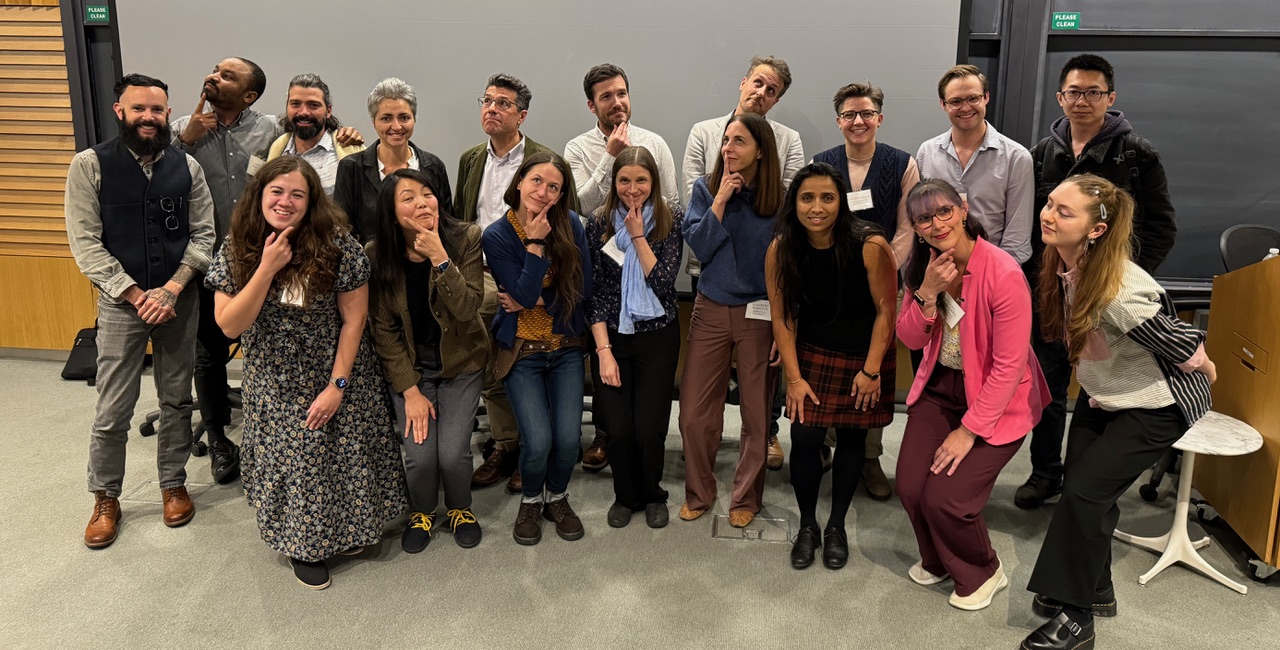
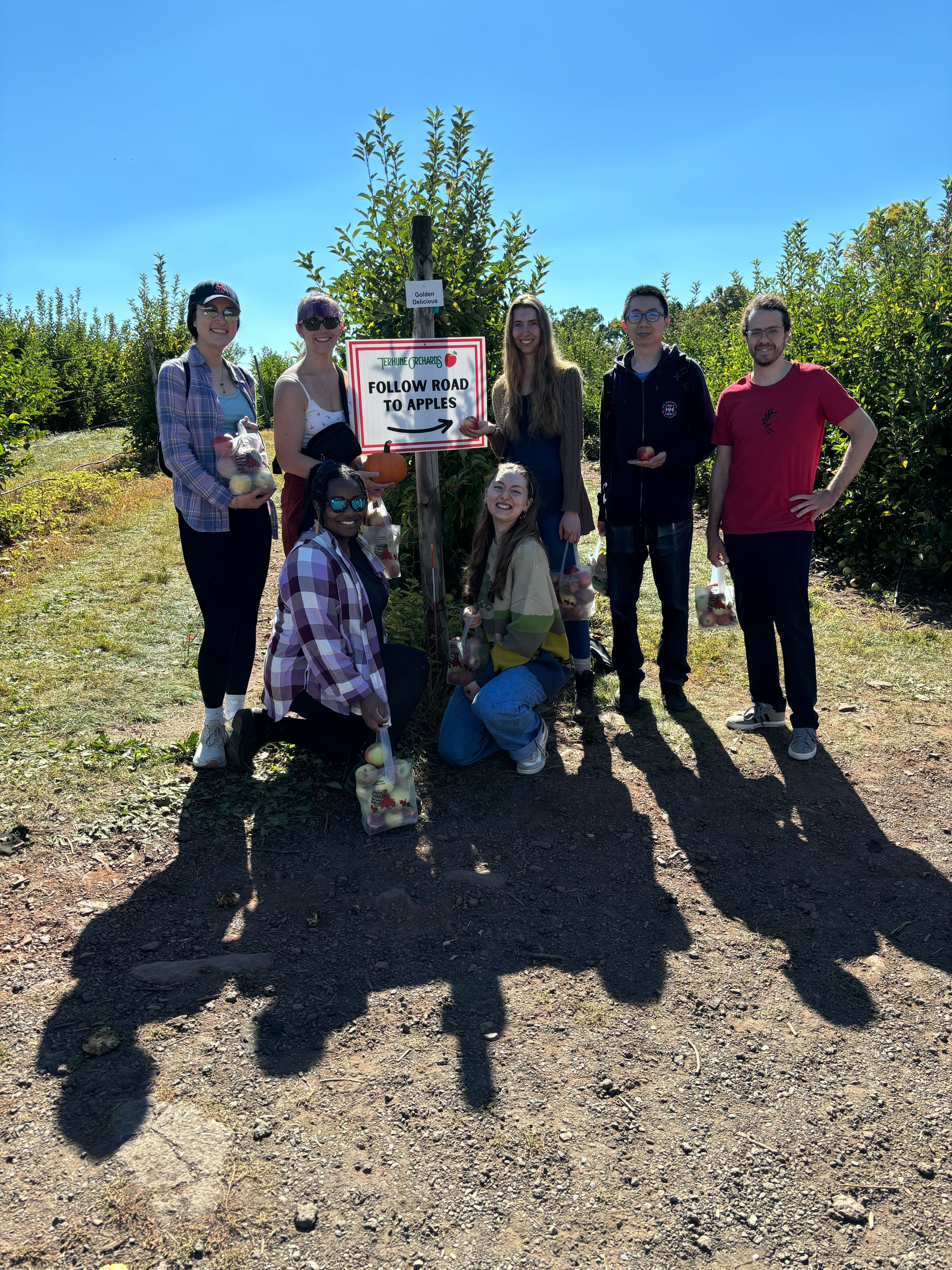
Other than the academic activities themselves, I also had a taste of living and working in a new environment at Princeton during this trip. Although I had had a few experiences in taking research trips to the United States in the past, through my interaction with the university systems, the campus and the people, I still felt the Princeton trip very fresh and interesting. For example, people in the Music Cognition Lab are all extremely welcoming and talkative, which made it easy for us to become friends. On one of the Saturdays, we visited an orchard in Princeton suburb and did apple picking together. We also went for dinner or Karaoke for a few times. All these experiences have become valuable memories of mine and taught me some American-style social skills (which is good for me as a quiet person).
In sum, this research trip from Durham to Princeton provided me an opportunity to work in a new environment, to experience a new culture and make new friends. The music-evoked imaginings workshop was also a valuable experience, during which I had the chance to share my own research and to learn from the brightest minds. Finally, although every research trip is different, I hope this article can still be helpful for those who are considering to take a research trip to another university or institute.

 Music & Science
Leave a comment