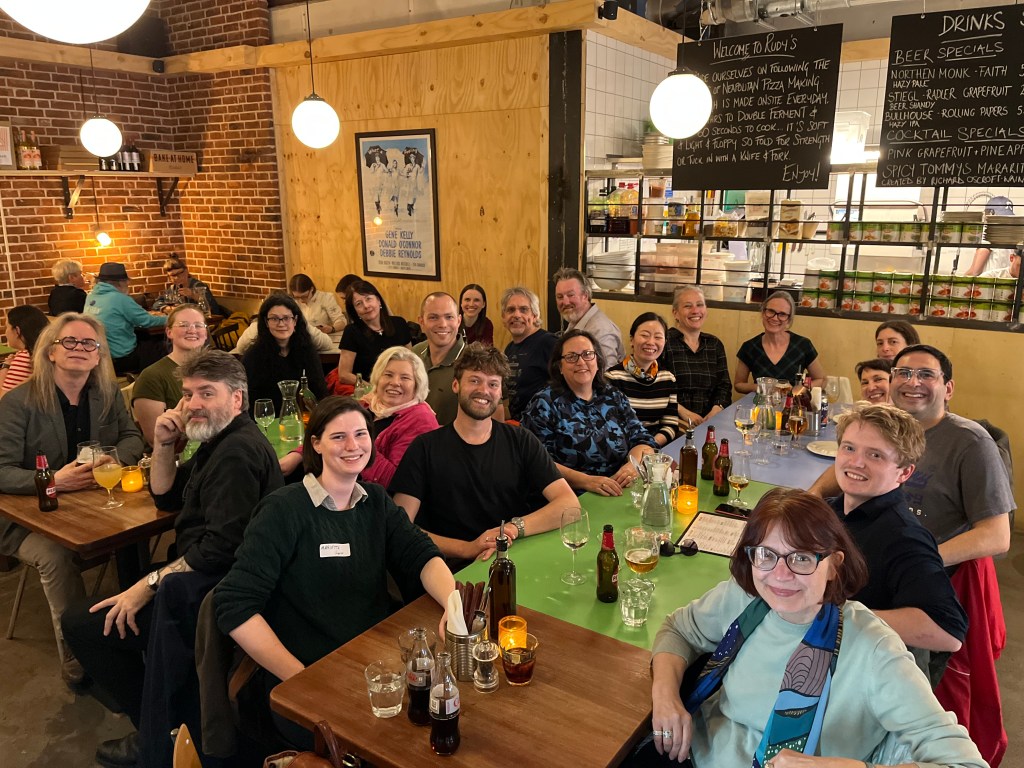
The first International Symposium on Inner Music and Wellbeing was held on 18-19 May 2026 at Durham University. The event brought together a wide range of different disciplinary perspectives and speakers from across the globe. In this post I highlight some of the main themes that emerged across the event. Over the coming months we will also feature overviews of some specific research projects, written by presenters from this event.
A range of presentations focused on ways inner music can serve to impact mental and/or physical health for the better. Several presentations touched on themes of how inner music (generated either purposely or spontaneously) can serve emotion regulation purposes, help people to cope during difficult times, or serve as welcome “mental company”. Beyond everyday wellbeing functions, there were also talks on how inner music can serve as a bridge for working through difficult issues between music therapy sessions, particularly in situations where “real” music, in physical or digital format, is not available to the client (in this example, a military setting where music access is prohibited).
Several presentations explored how inner music may be used in functional ways by clinical or neurodivergent groups. It was discussed how inner music can serve as a bridge to cochlear implant users, who are tasked with navigating the challenges of hearing music in a completely different way to their previous experience. Other presentations focused on how inner music can be used by people with Parkinson’s disease, for instance to help initiate or stabilise movement or for general mood regulation. New, forthcoming work aiming to capture the range of functions of inner music for people with autism promises further interesting insights.
The topic of “When does inner music become problematic?” was considered within a panel discussion and as an emergent theme throughout several presentations. Researchers and clinicians with expertise in tinnitus, verbal hallucinations, and musical hallucinations contributed insights on aspects of these experience that are particularly problematic (e.g., repetitiveness, lack of control, associated meaning), with an eye toward considering how these findings might inform how we think about the problematization of inner music. Beyond these more clinical manifestations, other presentations considered the impact of contemporary capitalism on the music in our minds and how inner music can lead to distraction or reduced attentional resources when performing other cognitive tasks.
Another recurrent theme was the role of inner music in the experience of trained musicians. Musicians served as a valuable group for taking a deep dive into the phenomenology of highly pleasurable experiences of inner music, given their nuanced ability to introspect on the features of their inner music in detail. Other work carefully examined how the neural correlates of inner singing changed in relation to the self-reported “flow state” of the experiencer. Finally, the important concept of auditory aphantasia (also called anauralia) was introduced; people with auditory aphantasia have no experience of inner sound. It was considered how current music educational practices can be potentially unhelpful or even detrimental to this group, given the heavy emphasis on “audiation” and “hearing the music” in one’s mind before playing.
Beyond the academic presentations at this event, we considered a range of artistic representations of inner music. This including a summary of the current set of examples within our Inner Music in Fiction and Biography database, a videographic project on inner music by Sam Walton (Enable Original Sound), and a collection of musical scores written with the intention of being imagined, curated by Janet Oates (Closet Music). A performance by Elysium Theatre Company and members of Durham Student Theatre, with newly commissioned music by composer Ed Cooper, brought some of these ideas to life: three scenes from Shakespeare’s The Tempest served to demonstrate how inner music experiences can be conveyed on stage, and how these experiences give us unique insights into the mental states of the characters.
In sum, this was a highly stimulating and collegial event, with lots of interesting synergies emerging throughout. I look forward to seeing what new projects and collaborations might emerge out of these discussions. A huge thanks go out to all presenters, session chairs, project partners, network advisors, and the AHRC and SEMPRE for funding!





Leave a Reply